Open houses succeed or fail well before the first visitor arrives. A beautifully staged home with weak promotion draws a handful of neighbors and the same three agents who show up to every open house in the area. A well-promoted open house, on the other hand, can generate genuine buyer traffic and — just as valuably — a list of new buyer leads for the agent hosting it. This checklist covers the full timeline, not just the sign on the lawn.
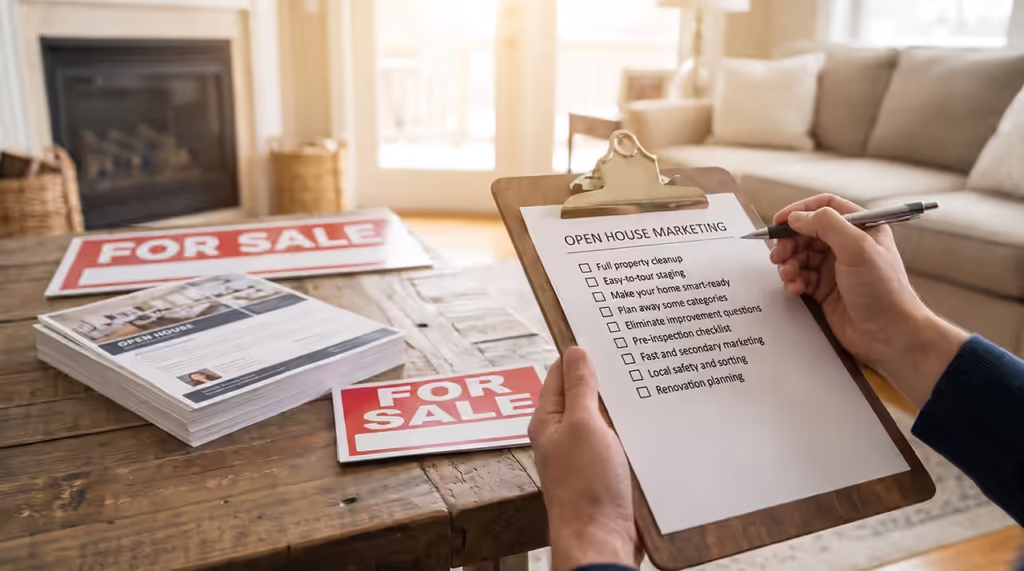
One to Two Weeks Before
- Confirm all listing media is live and current. An open house promoted with outdated or incomplete photos undermines the event before it starts — the online gallery is what convinces someone the trip is worth making.
- Create a dedicated open house graphic or short video. A simple, scroll-stopping visual with the date, time, and hero image performs better than a text-only post and gives you something specific to promote across every channel.
- Add the open house to MLS and all syndicated portals as soon as the date is confirmed — many buyers filter search results specifically for homes with an upcoming open house.
- Notify your buyer database directly if you have current buyers whose criteria match the property, even if they’re technically working with another agent — a personal heads-up email still gets read.
Three to Five Days Before
- Post the open house across social channels, using both a feed post and Stories/Reels format. Stories in particular benefit from a countdown sticker or “save the date” framing, since they get resurfaced to viewers as the date approaches.
- Boost the post if budget allows, geo-targeted to the immediate neighborhood and a wider radius of likely buyer areas — open houses draw meaningfully more traffic when the promotion reaches beyond the agent’s existing followers.
- Email past clients and sphere of influence. Even buyers who aren’t in the market are often the best source of referrals — “know anyone looking in this area?” performs well in this format.
- Reach out to co-op agents working with buyers in the relevant price range and area, particularly if the property has features suited to a specific buyer type (waterfront, large lot, specific school catchment).
The Day Before
- Print or prepare digital sign-in materials. A QR code linking directly to the listing (and to a lead capture form) is more reliably used than a paper sign-in sheet alone, and it captures contact info more completely.
- Prepare printed materials: feature sheets, floor plans, and a leave-behind with your contact information and a QR code to the full online gallery or virtual tour.
- Post a final reminder across social channels — this is the post that catches people finalizing weekend plans.
- Check the weather and adjust signage plans accordingly — in Metro Vancouver specifically, having a rain-ready sign plan (rather than paper signs that don’t survive a wet Saturday) is worth confirming the day before, not discovering the morning of.
Day-Of Checklist
- Signage placed early and along the actual traffic routes buyers will use, not just directly outside the property — directional signs at nearby intersections meaningfully increase walk-in traffic from people who weren’t specifically searching for the address.
- Digital sign-in ready and tested before the first visitor arrives.
- A live post or Story once the open house is underway, showing the space actively — this can catch last-minute decision-makers who see it and decide to stop by within the hour.
- Lighting and staging details confirmed to match what’s shown in the listing photos — visitors who loved the online gallery will notice immediately if the in-person experience feels different.
After the Open House
- Follow up with every visitor within 24–48 hours, while the property is still fresh in their mind. A generic “thanks for stopping by” performs worse than a follow-up referencing something specific from the visit or their stated interests.
- Post a wrap-up, especially if turnout was strong — social proof (“great turnout at today’s open house”) reinforces the listing’s desirability for buyers who didn’t attend but are watching the listing online.
- Log every lead, even ones who clearly weren’t a fit for this specific property — open houses are one of the more reliable sources of buyer leads for future listings, not just this one.
- Report back to the seller with real numbers — visitor count, general feedback, and any offers or strong interest generated. Sellers consistently rate this kind of transparent reporting as one of the things that builds trust in their agent.
The Underlying Principle
An open house is a marketing event, not just a scheduling detail on the listing. The agents who treat it that way — building promotion into the week leading up to it and following a real lead-capture and follow-up process afterward — consistently get more out of the same two hours than agents who simply put a sign out and wait.