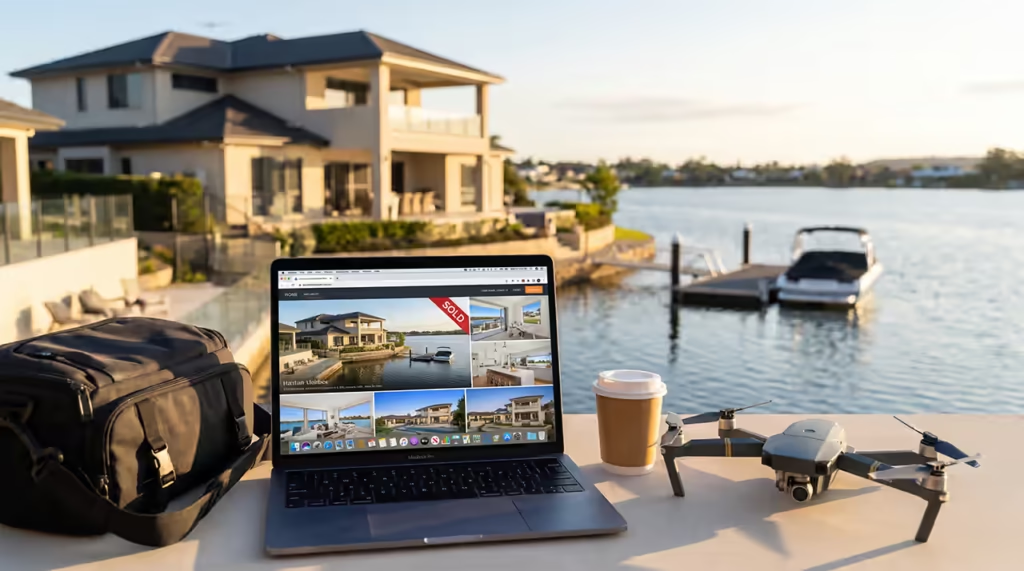
Waterfront properties are one of the few residential categories where the setting is arguably more valuable than the structure itself. That reality should completely change how these listings are marketed — and yet waterfront homes are frequently shot with the same approach used for any other listing, with the water treated as a nice backdrop rather than the primary asset being sold.
The Water Is the Headline, Not the Backdrop
For most listings, the exterior hero shot is the front facade. For waterfront properties, that’s almost always the wrong choice. The hero image should establish the relationship between the home and the water — a shot that makes clear this property has direct access, an unobstructed view, or genuine waterfront frontage, not just proximity to it.
This is where aerial photography earns its place as essential rather than optional for this category. A drone shot showing the full property, its shoreline, dock, or beach access, and its position relative to the water communicates something a ground-level shot simply cannot: scale, exposure, and privacy. For buyers evaluating waterfront specifically, this single shot often does more to justify the asking price than the entire interior gallery combined.
Timing the Water Itself
Water is not a static backdrop — its appearance changes constantly with light, tide, and weather, and that variability needs to be planned for rather than left to chance. Flat, overcast light can turn an ocean or lake view a dull grey; the same water under clear afternoon light reads blue and inviting. For tidal waterfront specifically, shooting at low tide can expose mudflats or rocky shoreline that undercuts the property’s appeal, while a shoot timed to high tide shows the water at its most expansive.
This means waterfront shoots benefit disproportionately from flexible scheduling around both weather and, where relevant, tide tables — treating the shoot date as a decision made around the water’s condition, not just the realtor’s calendar.
Golden Hour and Twilight Are Non-Negotiable
Few property types benefit as much from twilight photography as waterfront homes. The interplay of a lit interior, the last light on the water, and (where applicable) reflections off the surface produces some of the most compelling real estate imagery possible — and it’s a shot type that consistently outperforms daytime exteriors for engagement on waterfront listings specifically. Given how much this shot type depends on precise timing and cooperative weather, budgeting for a day-to-dusk conversion as a backup gives the listing a reliable version of this hero shot even if the actual sunset gets clouded out.
Showing Access and Amenities, Not Just the View
Buyers seriously considering waterfront want to know how they’ll actually use it: Is there a private dock? Deep water moorage? A beach that’s usable at low tide? Direct swim access, or a rocky shoreline that limits it? These functional details deserve their own dedicated shots rather than being implied by a wide view — a buyer evaluating a $3M+ waterfront property is going to ask these questions regardless, and answering them in the marketing pre-qualifies serious interest before the first showing.
If the property includes a boat, kayak, or paddleboard storage, outdoor living spaces oriented toward the water, or a fire pit or dock seating area, these lifestyle-use shots do meaningful work in helping a buyer picture their actual life on the property — not just the view from inside.
Video That Matches the Setting
A cinematic walkthrough is particularly well suited to waterfront properties because the format can build a genuine sense of arrival — the drive in, the first glimpse of water, the walk toward the shoreline — in a way stills can’t replicate. Drone footage that transitions from an aerial establishing shot down to ground level at the water’s edge is one of the more effective openings for a waterfront listing film, immediately establishing both the setting and the scale.
A Waterfront-Specific Shot List
- Aerial establishing shot showing the full property and its water relationship
- Ground-level shoreline, dock, or beach access shots
- At least one shot capturing water condition at its best (tide, light, calm water)
- Twilight exterior with lit interior, water-facing
- Interior shots prioritizing rooms and windows oriented toward the view
- Lifestyle-use shots of any water-adjacent amenities
- A drone-to-ground cinematic sequence for video, if motion is included
The Bottom Line
Waterfront buyers are paying a premium for something photography can either fully justify or quietly undersell. Treating the water as the property’s primary asset — planning shoot timing around it, prioritizing aerial and twilight content, and showing real access and use — is what separates marketing that matches a waterfront listing’s actual value from marketing that merely documents it happens to be near water.